My grandma—a bootlegger?
It’s been a busy few weeks!
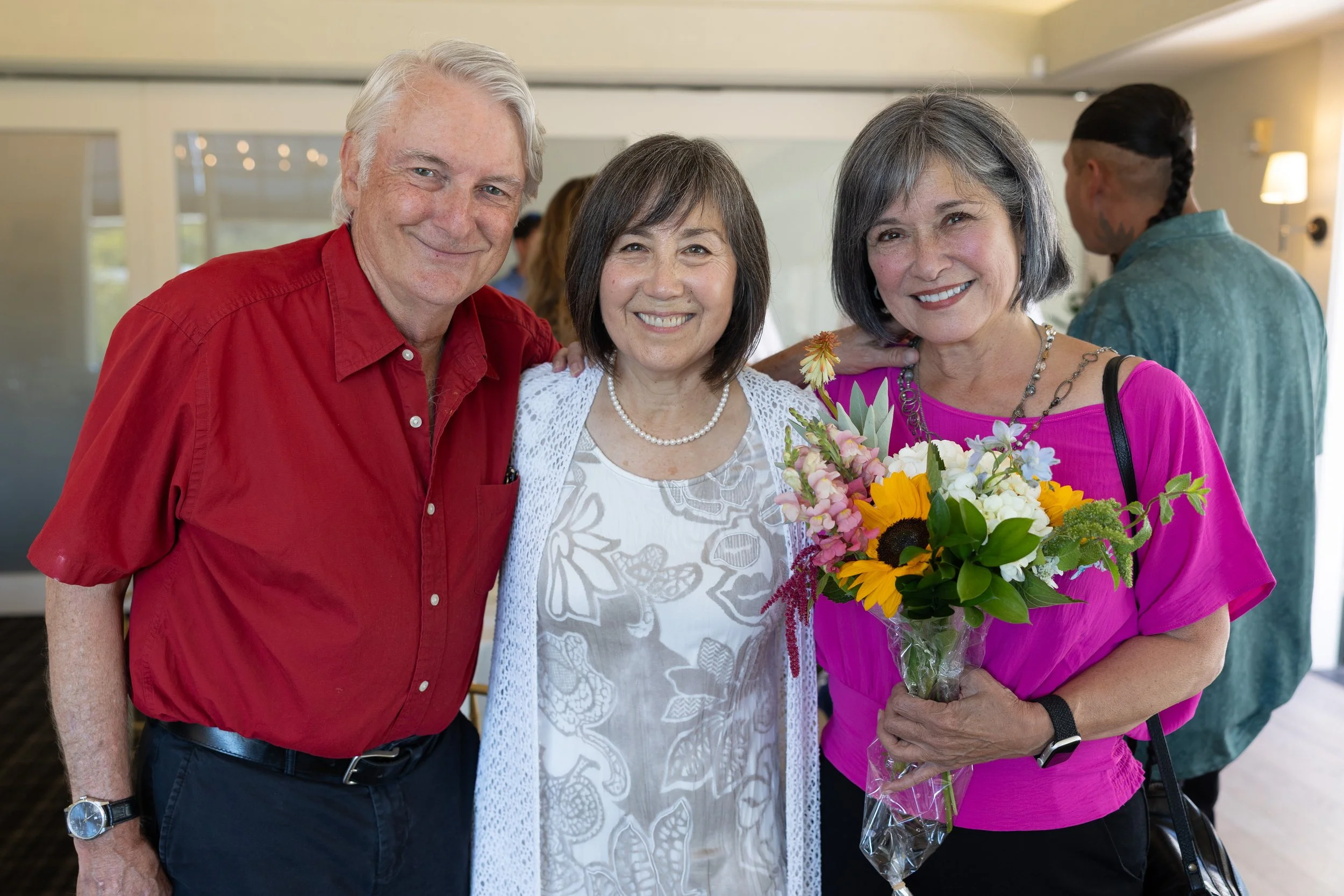
Jon and I attended my high school friend Ann Dacus Jordan's 70th (!) birthday party near Monterey, CA. Here’s us:
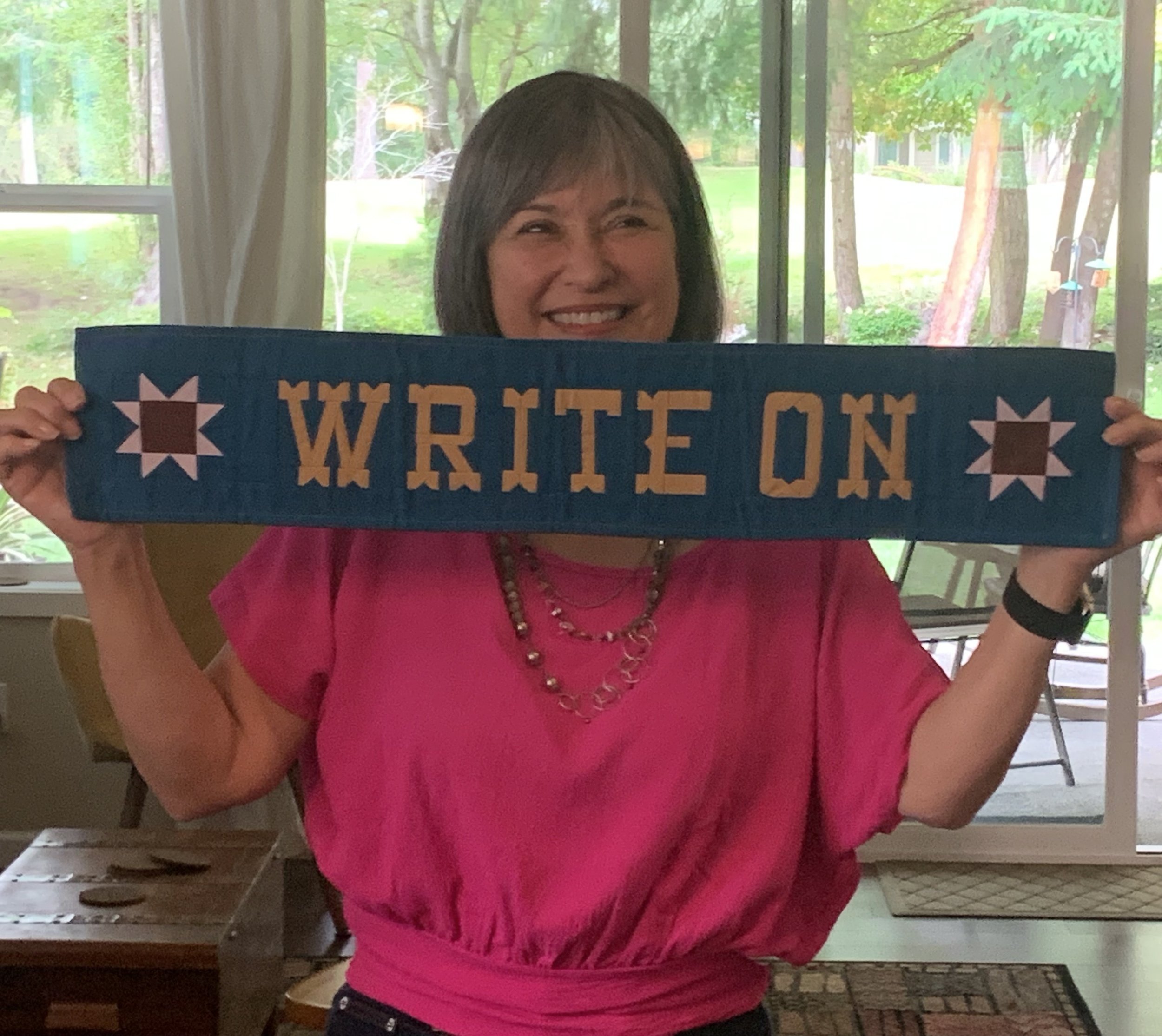
My husband threw a fun birthday party for me the following week, when I got to celebrate with lots of family, friends, and neighbors. My daughter Christina made this perfect present—a quilted banner to remind me to keep writing!
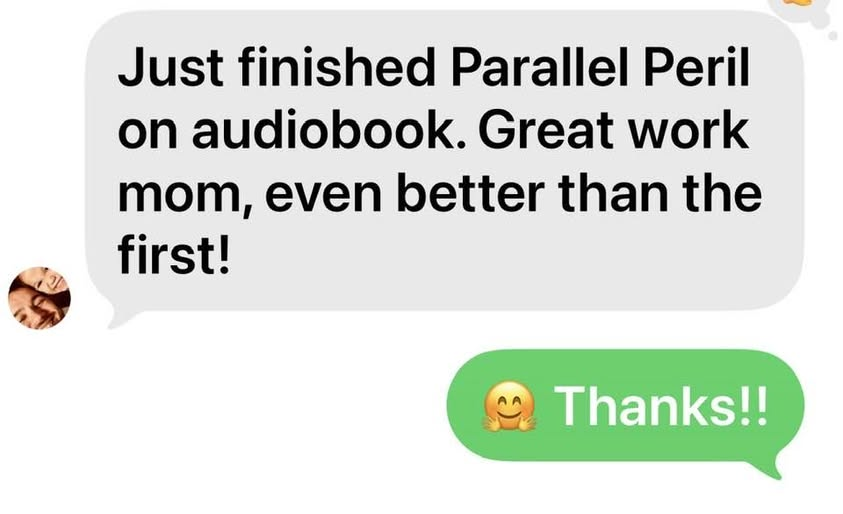
I’ve started sketching out the next Vicky Robeson Mystery. In book three, Vicky is news director at an unspecified TV station in Dallas, where the story takes place. I did that job for many years and I have plenty of interesting anecdotes (and characters) to work into the story. But my main focus now is finishing the story of my family. I love our history, especially my Filipino Grandmother.
Here’s a draft excerpt. Mom and I are on a bus in Manila, and she’s been telling me about life up after the devastation of World War Two:
Grandmother turned the bottom story of their house into a small restaurant. They started selling lumpia, pancit, adobo—classic Filipino food made in their home kitchen. The best customers—the ones with money—were American soldiers. Everyone loved the Americans who had liberated their country. And American soldiers liked whiskey, so Grandmother started selling that, too. Mom said Grandmother got a chemist friend to make whiskey in big barrels outside the house. She even bottled it, labeled with the name, ‘Five Roses.’
The name and label bore a remarkable resemblance to the popular American ‘Four Roses Bourbon.’ Grandmother had good business instincts.
Mom and some of her sisters worked there, and were the inspiration for the restaurant’s name, ‘The Four Sisters.’ And it wasn’t the first inspiration their mother had. Grandmother was tough and smart and knew it was up to her to make sure the family survived the war and to get things back together after it ended. Nobody—not even Mom when she talked about it—seemed sure where Grandmother got the horse, but her sons hitched it up to a cart and started a taxi and hauling service. That was just one of her businesses. She also did laundry, sewing, and baking.
Mom’s father died before I was born, but I remember Grandmother coming to visit when I was maybe four or five. She came to see Mom and my aunts, uncles, and other relatives who had immigrated to California from the Philippines in the first decades after the war ended in 1945.
Grandmother was not like anybody else I knew. She was round and not much taller than me. She had a sweet spicy smell I’d never smelled before. She waved her hands around, laughed a lot, and made funny noises. She talked fast. I knew she was speaking Tagalog, my mom’s language, but I didn’t understand anything she said, not one word.
We kids had to kiss her hand when we met her. Some grownups did that too. They said it was a sign of respect. I remember being terrified. She touched my head and face and held my hands up while she looked at me. Her gray hair was in a little bun. She wore rings and necklaces and carried a bag of her things, including food. The women in Mom’s family usually carried something to eat in their purses.
Of all the businesses Grandmother started, The Four Sisters was the best. And it’s because of it that Mom met and fell in love with Dad.
Mom always blushed and giggled when she talked about meeting Dad. Sergeant Theodore Roosevelt Barrs, Jr. of the US Army Air Corps, was from a tiny coalmining community in the state of West Virginia, who found himself stationed on the other side of the world at the end of World War II in the Pacific. Part of his job was to fly over some of the 7,000+ Philippine Islands and draw maps and take notes.
He and a buddy had come looking for The Four Sisters restaurant. Dad’s sister, Aunt Hilda, was pen pals with somebody—who that somebody was varies with who’s telling the story—who set up a meeting with Mom’s older sister, Aunt Conception, known to us later as Aunt Connie. The restaurant was closed, so the two soldiers stood looking at the house, then knocking on the door, while the sisters watched from the upstairs window. Mom said, “Connie. He was supposed to meet my sister Connie. But she had a toothache and her face was swollen so she was too embarrassed to meet anyone!” So it was Mom who was nudged forward to be introduced. Her sister literally pushed her and Mom almost fell into the room, practically right into my father.
That day, as we rode to meet the ferry, as she told the story, I pictured Mom as a girl, not yet 16, trying to keep her eyes off the young man she’d just met. Dad was 18 years old and pretty damn handsome. People said he looked like Clark Gable. And he did.
He had dark curly hair and the nicest smile and was very, very handsome in his uniform. But he was older, and American. She wondered if he would come back. He did. We used to tease Mom that she met Dad in a bar. She would correct us and say it was a restaurant, but always with a little smile.
I miss Mom’s smile.
I’d love to know what you think! You can send me a message here!