The Luddites had a point.
I called myself a bit of a Luddite the other day (more on that later) as I told someone I had personal qualms about using an AI-generated trailer to promote my new book. (Parallel Peril! Out April 22!). One reason is that several people who are very dear to me make their livings creating art in different media and forms. They’re keeping a wary eye on how their livelihoods may be affected by artificial intelligence. As a writer, as a human being, I too am wary, even fearful.
But, spoiler alert: I did it anyway.
In the interest of expediency, I hired a company online to make a promo for me. The company was upfront, no doubt for legal reasons. In the agreement, I clicked ‘acknowledge’ or ‘agree’ multiple times to confirm that I was aware of and accepted their use of artificial intelligence to create the visuals, sounds, and narration.
I could have paid extra to have a machine—okay, the software in a machine—write the script, but I felt competent to do that part myself.
AI had a hard time figuring out how I wanted the book promo to look and feel. It took three major revisions to even come close to what I wanted, despite my having been clear in my instructions from the beginning. One example: when “Bethany” was ready to start my project, I wrote:
“One of the most important elements is the mysterious symbol drawn in an old journal and carved into a tree. Much of the story hinges on it, I describe it in detail in the book, and in the doc I submitted to you. It basically looks like a tree trunk that splits to form four large branches, two on each side, pointing diagonally upward. They should not be overly symmetrical.”
Maybe it’s just me, but that seems clear enough that I should not have gotten a symbol with just three branches, but I did. I sent a drawing and it came back wrong again. Twice. There were multiple other issues, but it was going to start costing more money to make changes, so I let some of them slide. I was so focused on the bigger issues I didn’t even notice the major misspelling. Now I can’t watch the trailer without seeing it.
At any rate, I am going to use it...
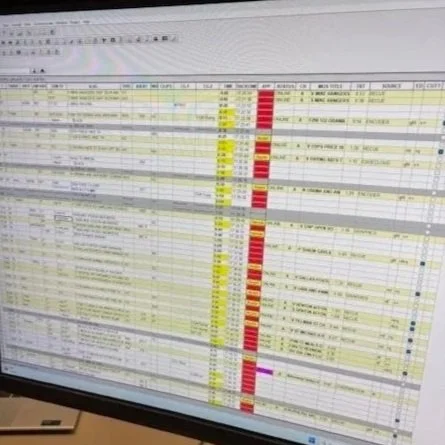
Newscast computer system
I comforted myself with the logic that I’ve been using forms of AI for years to do research, find a better word, spellcheck and edit my Word documents. I’ve used ChatGPT to create lists, get instructions, and do research. I’ve ventured into making my own graphics on Canva.
I worked for decades in the television industry, which for a brief time was at the forefront of the evolution of technology. Then along came the internet, which local TV was slow to embrace because it cut into our ad revenue, and besides, we already had all that very expensive equipment…
When I started in TV news, some stations were still shooting on film. I’m not sorry I missed that era, and I was elated to go from manual to electric typewriter to computer. I’m very fond of my laptop and can’t imagine writing any other way. But I hated to see good people replaced by technology.
In 1994, when I started at KDFW (then CBS) in Dallas, in addition to engineers, field crews, and on-air talent, doing a live newscast required a director, a technical director/switcher, a chyron operator (who put graphics, names, and identifiers on the screen), an audio operator, studio camera operators, teleprompter op, floor crew, the producer, and sometimes an executive or supervising producer. That’s not counting assignment editors, writers, editors, and all the others who were crucial to producing content. Oh, and managers, like me.
The control room would get very crowded when something exciting was happening.
I left Dallas in 2011. A few weeks ago, I popped by the FOX4 newsroom for a quick visit at about 4pm on a Thursday. I got to see dear friends and colleagues, including the lovely and talented Clarice Tinsley, who has been anchoring at KDFW for FORTY-EIGHT years. (We agreed she absolutely has to stick around to hit fifty.)
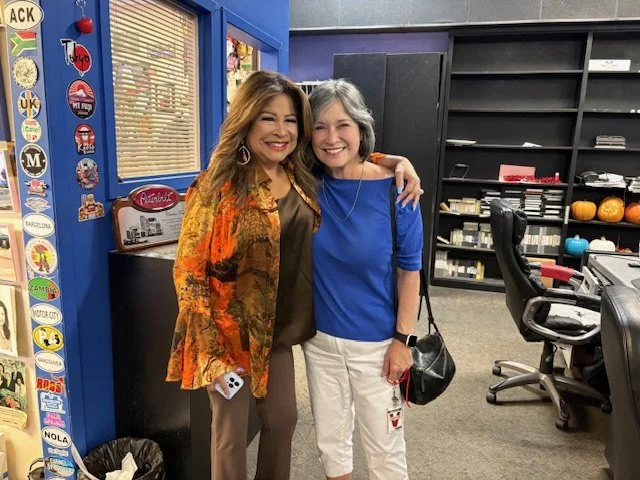
My dear friend Claire Tinsley
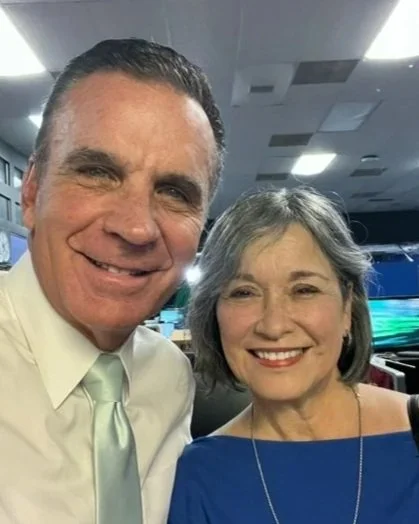
My friend and colleague Steve Eagar
The newsroom was eerily quiet. I stuck around for part of the Six. Anchor Steve Eager was the only person in the studio, and only one person was in the control room running the newscast.
Which brings me back to the Luddites. I had used the term in the way people commonly do, to reference technophobia or lack of expertise (the latter, in my case). I knew Luddites had revolted over the use of factory machinery, but didn’t remember when (early 1800s, maybe?) or where they got their name.
I turned to Google. According to History.com, the Luddites were British weavers and textile workers who named themselves after a Ned Ludd—who may or may not have actually existed—but was said to have destroyed a weaving machine in 1779.
They were artisans who feared the loss of their craft, livelihood, and way of life. They fought against the use of machines that replaced them, sometimes violently, but often with style and humor. “General Ludd” supposedly resided in Sherwood Forest, home to the celebrated Robin Hood.
The machine owners fought back hard. By 1813, the movement died after the last of the leaders were imprisoned, hanged, or shipped off to Australia (!)
My quick Google search showed that there is a lively movement to define and defend the motives of the original Luddites. There are clearly interesting parallels to today’s changing world.
(Parallels! Parallel Peril, Out April 22nd!)